Online
Free
administration@universityofatypical.org

‘Where Do We Live’ Drawing Workshop

June 8th — August 8th, 2021

With James Ashe
Free

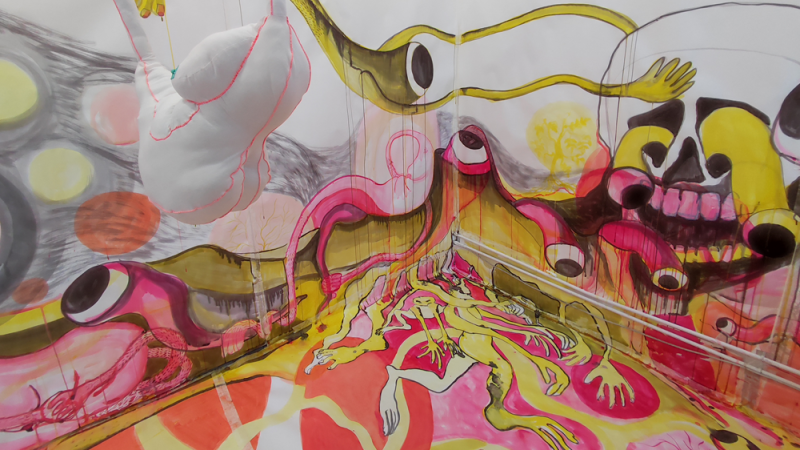
James Ashe invites you to take part in a series of artist-led workshops that will be an expansion of his ‘Where Do We Live’ map project exploring the hidden statues and sculptures in Belfast City. The workshops will begin with exploring the Strand Arts Centre and don’t worry we’ll provide the creative materials!

In these workshops we will look at the built environment and explore the history of the buildings in Belfast. Participants will be encouraged to take photos to inspire their drawings and collect their own images of statues to create their very own map as part of this project.
‘Where Do We Live’ is a free workshop and part of Accessing Architecture: Disability and Belfast’s Built Heritage by the University of Atypical is funded by National Lottery Heritage Fund Northern Ireland. The project researches the history of the disabled community in Belfast through the city’s built, industrial and cultural environments.
Workshops will be in person – Covid regulations permitting. Workshops will take place once a week for 8 weeks.
Communication and project updates will be via a Facebook group page – https://www.facebook.com/UofA21

Access: Please let us know your access requirements in advance, you can do this when you fill in the booking form.

BOOKING: limited spaces available so please register your interest as soon as possible. Further information will be provided about the workshop plan after your register.

Click HERE TO BOOK YOUR PLACE

Sign up to receive the latest news and updates.

Intangible Bodies – Paul Moore

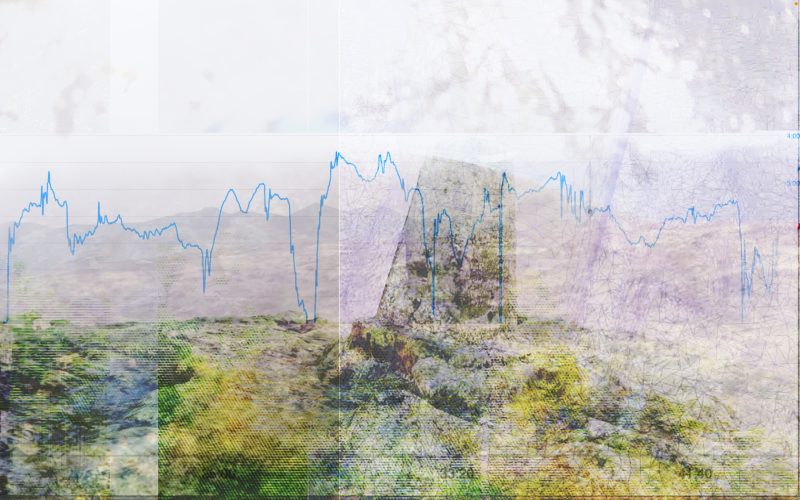
Intangible Bodies presents a projection mapped audio-visual installation, that treats the gallery as an interface, where perception, attention, and internal sensation are made spatial and shareable. The work is encountered through movement and proximity, part screen, part stage, part signal field.

Read More...

twixt – group exhibition

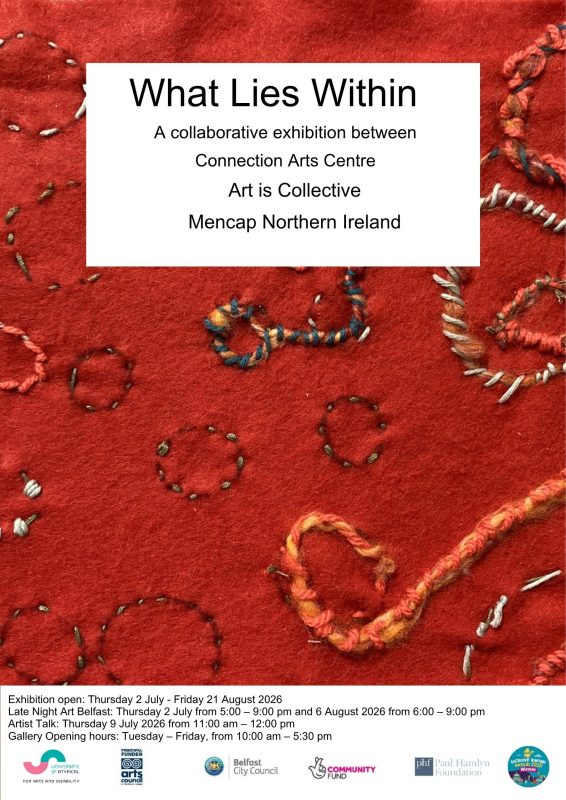
‘twixt takes its name from the notion of being in between, at an interval and interweaving. Recipients of our d/Deaf and Disabled Support Fund grant programme have used the funding to deliver new pathways towards their own goals, some artists pursuing experimental directions or new ambitions – each at their own stage of development and discovery between concept and realisation.
‘twixt showcases the work of some of our twenty d/Deaf and Disabled Artists Support Fund 2025 (DDASF) awardees, including Darlene Corry, Elly Makem, Emma Brennan, Eve Belle, Finn Nichol, Hana Abri Smith, Indigo Azidahaka, Jamie Baker, Jayne Cherry, Kate Guelke, Brian McAvera, Abby Oliveira and Liam Devlin. The exhibition includes ceramics, painting, textiles, music, photography, digital art, spoken word and sculpture.

Read More...

Intangible Bodies – Paul Moore

Intangible Bodies presents a projection mapped audio-visual installation, that treats the gallery as an interface, where perception, attention, and internal sensation are made spatial and shareable. The work is encountered through movement and proximity, part screen, part stage, part signal field.

Read More...

twixt – group exhibition

‘twixt takes its name from the notion of being in between, at an interval and interweaving. Recipients of our d/Deaf and Disabled Support Fund grant programme have used the funding to deliver new pathways towards their own goals, some artists pursuing experimental directions or new ambitions – each at their own stage of development and discovery between concept and realisation.
‘twixt showcases the work of some of our twenty d/Deaf and Disabled Artists Support Fund 2025 (DDASF) awardees, including Darlene Corry, Elly Makem, Emma Brennan, Eve Belle, Finn Nichol, Hana Abri Smith, Indigo Azidahaka, Jamie Baker, Jayne Cherry, Kate Guelke, Brian McAvera, Abby Oliveira and Liam Devlin. The exhibition includes ceramics, painting, textiles, music, photography, digital art, spoken word and sculpture.

Read More...

Charys Wilson – Half Light

The work is inspired in part by the practice of forest bathing, or shinrin-yoku: a Japanese tradition of spending quiet, mindful time among trees. Research shows that this kind of intentional time in nature can reduce stress, improve mood, and even boost the immune system.
For many of us this kind of immersive experience can feel out of reach, especially during the colder months or in urban environments. This installation is a way to bring some of those benefits indoors: a moment of calm, light, and quiet connection.

Read More...

This website uses cookies