CRAFT:IN EU Project 2021

CRAFT:IN Crafting the Inclusion: Crafts and Practices in non-formal education for increasing social inclusion

This project has been funded with support from the European Commission.
This publication [communication] reflects the views only of the author, and the Commission cannot be held responsible for any use which may be made of the information contained therein.
LANGUAGE CHOICE: ?? ?? ?? ?? ??

PROJECT’S ID CARD
Programme Erasmus+ Key Action 2 (KA2) Strategic Partnership in adult education
National Agency Agency for Mobility and EU Programmes – HR01 // Zagreb, Croatia // https://www.mobilnost.hr/en/
Contract number 2020-1-HR01-KA227-ADU-094674
Official Project Webpage (European Commission) https://ec.europa.eu/programmes/erasmus-plus/projects/eplus-project-details/#project/2020-1-HR01-KA227-ADU-094674
Title Crafting the Inclusion: Crafts and Practices in non-formal education for increasing social inclusion
Acronym CRAFT:IN
Implementation 1 March 2021 – 31 August 2022 (18 months)
Total Budget 84,654.00 EUR
Coordinator: Association for Prevention of stigmatization and Education through theater – UPSET // Zagreb, Croatia // http://upset.hr
Partners
Blauschimmel Atelier // Oldenburg, Germany // https://www.blauschimmel-atelier.de/
Zavod Tri // Škofja Loka, Slovenia // http://www.zavod-tri.org/
Arts & Disability Forum (University of Atypical) // Belfast, Northern Ireland, United Kingdom // https://universityofatypical.org/
Guerreiro & Silveira, Lda // Lisbon, Portugal // https://www.facebook.com/guerreiroesilveira/

SHORT DESCRIPTION
Crafting the Inclusion: Crafts and Practices in non-formal education for increasing social inclusion (CRAFT:IN) is a partnership focused on exchange of various crafts that will develop human resources within partner organisations, develop key competences of their staff, start new non-formal educational activities and entrepreneurship initiatives, and promote social inclusion of marginalised groups.

CRAFT:IN consists of five partner organisations from Croatia, Germany, UK, Portugal, and Slovenia with transferable knowledge of a craft – one that their educators use in educational work with adults from various marginalised groups (refugees, Roma, people with disability, migrants…).

Working with marginalised groups, partner organisations noticed that crafts can play a role in raising social inclusion, cultural awareness and mutual understanding between the dominant local culture and marginalised. Simply said, doing crafts, working with hands, sharing tools, methods, and owning their final products helps motivation, communication and mutual understanding.

For the most part, crafts can be thought nonverbally (through practice) and, as such, are ideal for outreach campaigns and inter-cultural work even with communities who don’t speak the language. Crafts bring together people from various backgrounds (including marginalised groups) and promote interest in both “old” (local) and “new” (e.g. refugees) tradition, heritage, culture, skills, and design. As such, crafts help preserve the local culture, but also mirror the cultural diversity of peoples in Europe and can be platforms for intercultural exchange.

However, positive effects are limited and quite vulnerable. To overcome this, activities should be continuous and explicitly established. They simply don’t occur spontaneously, as researchers Erasmus Universiteit in Rotterdam found in 2018. In other words, there has to be an agent that will facilitate inspiring craft programmes for marginalised groups, after which crafts show positive effects and harbour social inclusion and build “new”, mutual European cultural identity.

For this reason, partner’s gathered in CRAFT:IN as they will gain knowledge of new crafts they can then introduce to their marginalised groups and develop new craft educational programmes of higher quality and international appeal. This will enable partners to develop their human resources and network further, their staff members to raise their EU Key Competences (multilingualism, cultural expression, entrepreneurship), and (with time) help heal social divide between the locals and marginalised groups.

Each partner will host one independent Learning Teaching and Training (LTT) workshop where each host will, through methods of practical learning and non-formal education, share a craft they are masters of, and incite cultural exchange through practical experience and face-to-face participants’ interaction. Each workshop will end with an exhibition of products made at the workshop and/or public event where participants will promote inclusion, meet the locals, and discuss the role of crafts in developing inclusion at local level. In order to utilise newly gained knowledge and skills the most, partners will send two representatives to each workshop, to learn new skills and crafts. Upon their return, they will organise follow-up presentations (20 in total; 4 per partner) of the new skills and, where possible, start new inclusive programmes in the local community based on their new craft. To make their experiences tangible, partners will publish a Manual on various crafts we shared in effort to promote inclusion.

In the background, but equally important, partners will host three Transnational Project Meetings (TPM) where managers will monitor project’s implementation, evaluate its past activities, and plan the future ones; including online campaigns for promotion and dissemination, and coordinating production of informal outputs.

In total, 40 educational mobilises, 10-15 participants from marginalised groups, 3 project meetings, 1 online publication on inclusive crafts, 5 workshops and exhibitions/public discussions will be held. These activities will significantly increase partner organisations’ human resources, develop individual key competences, and promote crafts as means of inclusion and non-formal learning.

In the long term, partner organisations see this partnership as a “stepping stone” – the first of many that will follow and lead to a sustainable and open European platform for inclusive crafts and social entrepreneurship. Partners are committed to building this platform that will help preserve, develop and promote crafts for social inclusion.

LEARNING, TEACHING AND TRAINING ACTIVITIES (LTT’s)
The core activities of our partnership are the co-called “LTT’s”, educational workshops where partners get to share their craft. There are other activities, but these ones are special (and at the core of our goals). One partner hosts the event and shares their craft/method, while others participate and learn. Of course, this process is one of non-formal education and both “sides” get to learn and share – hosts and sending partners. This is ensured by feedback sessions held at the end of each of the workshops, where participants share their insight into what was “good, bad, and the ugly” (what they learned, what could be better, and what should be avoided in the future).

Here are the descriptions of LTT’s, as planned at the beginning of our partnership:

LTT C1: Enterprise, Play, Include, Create (EPIC) aromatherapy, clay work, hygiene and disinfectants production crafts for inclusive work – Zagreb, Croatia
LTT C2: Felt Future – the fibres of connection and inclusion – Belfast, Northern Ireland (United Kingdom)
LTT C3 Form, include, cooperate in weaving and tiles – Lisbon, Portugal
LTT C4 Let’s flourish! Participatory crafts(wo)manship for inclusive community – Škofja Loka, Slovenia
LTT C5 Arts and inclusion – mask building and mask playing – Oldenburg, Germany
MAP OF OUR PARTNERSHIPS AND PARTNER ORGANISATIONS (click on image to open the interactive map)

PROJECT’S CHRONOLOGY AND ARHIVE
12 June 2021 Open Days of Associations 2021: Presentation of our inclusive Erasmus + projects CRAFT: IN and Urban Survival Kits
19-23 July 2021 LTT C1 “EPIC” workshop held in Zagreb, Croatia
24 July 2021 Kick-off & COVID-19 transnational meeting of project managers
1 – 3 October 2021 LTT C2 “Felt Future” workshop held in Belfast, Northern Ireland (UK)
16 October 2021 Presentation of the project on Erasmus+ Days 2021
21 – 25 March 2022 LTTC3 workshop in Lisbon, Portugal
26 March 2022 TPM2 Interim project managers meeting in Lisbon, Portugal
08 – 15 May 2022 LTTC4 workshop in Oldenburg, Germany
13 – 17 June 2022 LTTC5 workshop in Škofja Loka, Slovenia
18 June 2022 TPM3 Final project managers meeting in Škofja Loka, Slovenia
PHOTOS
Here you can find photos from activities held during the partnership.

EDUCATIONAL WORKSHOPS

LTT C1: Enterprise, Play, Include, Create (EPIC) aromatherapy, clay work, hygiene and disinfectants production crafts for inclusive work – Zagreb, Croatia
LTT C2 Felt Future – the fibres of connection and inclusion – Belfast, Northern Ireland (United Kingdom)
LTT C3 Form, include, cooperate in weaving and tiles – Lisbon, Portugal
LTT C4: Let’s flourish! Participatory crafts(wo)manship for inclusive community – Škofja Loka, Slovenia
LTT C5 Arts and inclusion – mask building and mask playing – Oldenburg, Germany
MEETINGS OF PARTNER ORGANIZATIONS

TPM1 Zagreb, Croatia: Kick-off & COVID-19
TPM2 Lisbon, Portugal: Interim Report
TPM3 Škofja Loka, Slovenia: Final Report
E-BROCHURE
To enable those who did not participate at our workshops to learn the basics of producing hand craft objects, partners decided to publish e-Brochures (brochures published online in PDF format). Each brochure depicts step-by-step the process of production of hand craft products that participants learned how to do during our workshops.

Click on links below to open (or download) e-Brochures:

Enterprise, Play, Include, Create (EPIC) aromatherapy, clay work, hygiene and disinfectants production crafts for inclusive work
Felt Future – the fibres of connection and inclusion
Form, include, cooperate in weaving and tiles
Let’s flourish! Participatory crafts(wo)manship for inclusive community
Arts and inclusion – mask building and mask playing
E-VIDEO
Alongside e-Brochures, partners made short e-Videos that follow the proces of production of hand craft products.

Click on links below to open (or download) e-videos:

LTT C1 (EPIC) workshop (Zagreb, Croatia)
Felt Future – the fibres of connection and inclusion (Belfast, Northern Ireland, United Kingdom)
Form, include, cooperate in weaving and tiles (Lisbon, Portugal)
Let’s flourish! Participatory crafts(wo)manship for inclusive community (Škofja Loka, Slovenia)
Arts and inclusion – mask building and mask playing (Oldenburg, Germany)
Watch all CRAFT:IN educational videos on our YouTube Channel:

Crafting the Inclusion: Crafts and Practices in non-formal education for increasing social inclusion (CRAFT:IN) is a partnership focused on exchange of various crafts that will develop human resources within partner organisations, develop key competences of their staff, start new non-formal educational activities and entrepreneurship initiatives, and promote social inclusion of marginalised groups.
CRAFT:IN consists of five partner organisations from Croatia, Germany, UK, Portugal, and Slovenia with transferable knowledge of a craft – one that their educators use in educational work with adults from various marginalised groups.

Working with marginalised groups, partner organisations noticed that crafts can play a role in raising social inclusion, cultural awareness and mutual understanding between the dominant local culture and marginalised. Simply said, doing crafts, working with hands, sharing tools, methods, and owning their final products helps motivation, communication and mutual understanding.

For the most part, crafts can be thought nonverbally (through practice) and, as such, are ideal for outreach campaigns and inter-cultural work even with communities who don’t speak the language. Crafts bring together people from various backgrounds (including marginalised groups) and promote interest in both “old” (local) and “new” (e.g. refugees) tradition, heritage, culture, skills, and design. As such, crafts help preserve the local culture, but also mirror the cultural diversity of peoples in Europe and can be platforms for intercultural exchange.

However, positive effects are limited and quite vulnerable. To overcome this, activities should be continuous and explicitly established. They simply don’t occur spontaneously, as researchers Erasmus Universiteit in Rotterdam found in 2018. In other words, there has to be an agent that will facilitate inspiring craft programmes for marginalised groups, after which crafts show positive effects and harbour social inclusion and build “new”, mutual European cultural identity.

For this reason, partner’s gathered in CRAFT:IN as they will gain knowledge of new crafts they can then introduce to their marginalised groups and develop new craft educational programmes of higher quality and international appeal. This will enable partners to develop their human resources and network further, their staff members to raise their EU Key Competences (multilingualism, cultural expression, entrepreneurship), and (with time) help heal social divide between the locals and marginalised groups.
Each partner will host one independent Learning Teaching and Training (LTT) workshop where each host will, through methods of practical learning and non-formal education, share a craft they are masters of, and incite cultural exchange through practical experience and face-to-face participants’ interaction. Each workshop will end with an exhibition of products made at the workshop and/or public event where participants will promote inclusion, meet the locals, and discuss the role of crafts in developing inclusion at local level. In order to utilise newly gained knowledge and skills the most, partners will send two representatives to each workshop, to learn new skills and crafts. Upon their return, they will organise follow-up presentations (20 in total; 4 per partner) of the new skills and, where possible, start new inclusive programmes in the local community based on their new craft. To make their experiences tangible, partners will publish a Manual on various crafts we shared in effort to promote inclusion.

In the background, but equally important, partners will host three Transnational Project Meetings (TPM) where managers will monitor project’s implementation, evaluate its past activities, and plan the future ones; including online campaigns for promotion and dissemination, and coordinating production of informal outputs.

In total, 40 educational mobilises, 10-15 participants from marginalised groups, 3 project meetings, 1 online publication on inclusive crafts, 5 workshops and exhibitions/public discussions will be held. These activities will significantly increase partner organisations’ human resources, develop individual key competences, and promote crafts as means of inclusion and non-formal learning.
In the long term, partner organisations see this partnership as a “stepping stone” – the first of many that will follow and lead to a sustainable and open European platform for inclusive crafts and social entrepreneurship. Partners are committed to building this platform that will help preserve, develop and promote crafts for social inclusion.

Sponsors

2021_UPSET_CRAFT_IN_OFFICIAL LOGO NO BCKGRN (1)

strangely disjointed & idiosyncratic

Dara Condon was the recipient of the University of Atypical’s Graduate Award 2019 and we’re pleased to see this promising graduate’s exhibition realised. Dara’s inspiration derives from eclectic pools of thought drawing on scientific theories, sacred symbols and forms, mythology and the power of the natural world.

This is Dara’s first solo exhibition and he has created an environment that explores how the mind processes visual information on a conscious and subconscious level. This new body of work forms a constellation of art forms drawing from the artists life and his experience of the mind, memory and mental health.

Gilly Campbell, Head of Community Arts & Education, Arts Council of Northern Ireland, commented, “I’m delighted to see this exhibition from Dara Condon open at the University of Atypical.  This is Dara’s first solo exhibition, offering the artist that all important next step in his professional, artistic career.  After such a long period of galleries being closed due to restrictions, it’s heartening to see them re-open and enthusiastically welcome the public back to see art up close and personal.  There are so many terrific exhibitions going on in galleries across Northern Ireland and I would encourage everyone to go along and support your local gallery this summer.”

Booking required – limited numbers are permitted on site, please include your access requirements when booking your place.

Fittings & MisFittings

The DisOrdinary Architecture Project was established in 2008. Since then a network of disabled artists have collaborated with architecture, interiors and built environment students, educators, researchers, practitioners and other interested groups to co-create new and exciting ways to do disability differently in the design of built space.

Fittings and MisFittings is part of Accessing Architecture: Disability and Belfast’s Built Heritage by the University of Atypical is funded by National Lottery Heritage Fund Northern Ireland. The project researches the history of the disabled community in Belfast through the city’s built, industrial and cultural environments.
About DisOrdinary Architecture

The DisOrdinary Architecture Project starts from the experiences, expertise and creativity of disabled artists. We work through co-partnering and co-design to bring together artists and built environment specialists on an equal footing.

Our collaborations aim to generate creative and critical opportunities that open up innovative new provocations for thinking and doing disability (and ability) differently in architecture and the built environment. By learning lessons from what we do, we aim to become thought leaders in the field, and to influence attitudes and practices as well as the design of our built surroundings.

2021 Graduate Award

University of Atypical’s 2021 Graduate Award

University of Atypical 2021 Graduate Award in association with Ulster University, has been awarded to Nina Oltarzewska. Nina will receive a prize of £300 towards her professional development and support from the University of Atypical.

The annual UofA Graduate Award supports an exceptional d/Deaf, disabled and neurodiverse artist at the beginning of their professional career. Nominations were invited from Belfast School of Art, Ulster University, to recognise the talent and promise of a D/deaf, disabled or neurodiverse student.

The panel considered Nina’s work as exceptionally promising, exploratory and innovative; her work is created from experience and deep emotion and has a fearlessness that is exciting.

Sean Fitzsimons, Chairperson of University of Atypical, joined in celebrating all nominees and in congratulating this year’s winner saying:
“The UofA Graduate Award in association with Ulster University, serves to amplify and elevate artists who identify as d/Deaf, disabled and neurodiverse. The 2021 winner Nina Oltarzewska, is a gifted and dynamic artist emerging from the BA(Hons) Fine Art course. We anticipate this artist will continue to develop work that will challenge and innovate as she continues in her professional career.”

Originally from Paris, France, Nina is a multimedia artist using sculpture, performance, video work that expresses emotions through immersive experiences. Nina uses space to create an intimate environment that involves both visual and auditory senses. She describes the goal of her work is ‘to build up momentum, until the work speaks to that glimmer of hope that we all somehow sense.’

On hearing of her win Nina said “I am honoured to have been granted this award. The role the University of Atypical plays in supporting the neuro-divergent, d/Deaf and disabled people is of great importance and I cannot wait to work more closely with them in the near future”.

Brian Connolly, Associate Lecturer, Sculpture/Lens, BA Fine Art at Belfast School of Art, Ulster University “The School of Art at Ulster University is delighted that Nina has been selected by the University of Atypical, for their Graduate Award this year. The Covid-19 pandemic has meant that this has been a very challenging year for both students and staff. Under such difficult circumstances the artworks and exhibition is a credit to all the final year students on the BA Fine Art Course.”

The University of Atypical is the lead disabled led organisation working on behalf of artists in Northern Ireland who are d/Deaf, disabled and neurodiverse. The Arts Council of Northern Ireland provides core funding to the University of Atypical. For more information on our work please email administration@universityofatypical.org.

Disability, Covid-19, & the ‘Second Shift’

The second shift refers to Arlie Hochschild’s 1989 book, which describes the labour performed at home in addition to the paid work performed in the formal sector. It is comparable to the extra hidden labour of people with disabilities, the necessary and reasonable adjustments they and their families need to function in society. We know that disabled people have been disproportionately affected by the pandemic and this project is an opportunity for individuals to take a snapshot to illustrate how they have been affected.

Lead artist Jacqueline Wylie will facilitate two zoom meetings to introduce participants to each other and discuss what artwork can be carried out independently and safely under the current lockdown restrictions. This is an opportunity to talk about topics like isolation, loss, and the realities of our lived experience and our daily journeys during a pandemic by contrasting them with virtual journeys on-line and in our imaginations.

Jacqueline will then facilitate a digital residency on Facebook over four weeks where participants will be encouraged to share and discuss their own developing art work. Jacqueline will share her own documentary photographs taken during the first lockdown, which will be shown at Strand Arts Centre in East Belfast in April/May 2021. This will form the basis of new work developed alongside participants, aiming to foster a supportive community for art making.

Finally, we will come together for another two zoom meetings to discuss a potential exhibition of participants to be curated by Jacqueline at the Strand in East Belfast.

BOOKING: These workshops are aimed at people who identify as disabled and spaces are limited so please register your interest as soon as possible.
Booking closes – 14 May 2021

Creating Time Awards 2020/21

Creating Time Awards 2020/21

First series of Unlimited grants awarded to d/Deaf, Disabled and Neurodivergent Artists

Winner of The Voice, Andrea Begley, is one of 11 d/Deaf, disabled and neurodivergent artists to be awarded £1,000 by a new grant programme run by the University of Atypical.

The Creating Time Awards is the first in a series of grant programmes funded by Unlimited and the Paul Hamlyn Foundation to support Northern Ireland’s d/Deaf and disabled artists to develop their work and enable them to reach new audiences.

Talented singer songwriter Andrea from County Tyrone and niece of Irish Country singing legend, Philomena Begley, said the grant would help her develop her audience reach and generate new products.

She explained: “As a visually impaired artist there are some things that I struggle to do and this grant will afford me the time and expertise of someone who is sighted to collaborate with me. Many online and digital platforms aren’t built in an accessible way, so a task like setting up an email marketing list for my fans is impossible for me. With the grant, I also plan to develop designs for merchandise that can be sold along with CDs; it’s something I’ve wanted to do for some time.”

The Creating Time awards are designed to provide d/Deaf, disabled and neurodivergent artists with funding to access mentoring to enhance knowledge or skills, develop new ways to promote their work or simply to buy the time needed to continue with their professional practice.

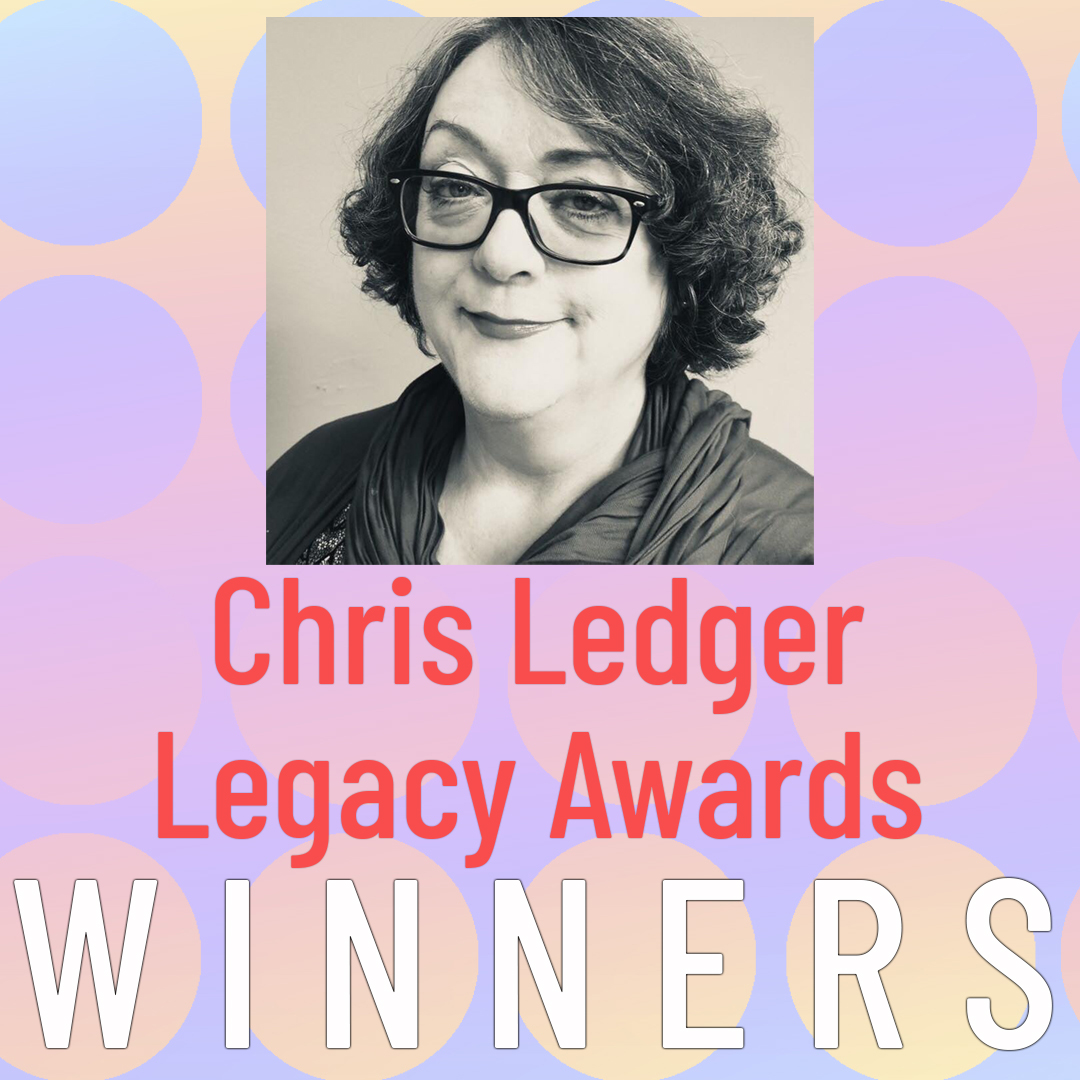
Awards were made to artists in the following disciplines: Dance, Literature and Language Arts, Drama and Theatre, Music and Opera, Visual Arts, Film, TV and Combined Arts. The next programme, the Chris Ledger Legacy awards, opens in May 2021 and is named after the former CEO of University of Atypical who sadly passed away in the summer of 2020.

Awards were made to 11 established and emerging artists including:

Shannon Sickels (Yee), is an award-winning playwright best known for Reassembled, Slightly Askew, an autobiographical, audio-based artwork about her experience of falling critically ill with a rare brain infection and her journey of rehabilitation with an acquired brain injury.

Robin Price is a visual artist with a background as a theoretical physicist and his work centres on interactivity and technological interventions. He alters everyday devices so that the devices can be seen anew.

Grace Fairley is an artist and illustrator who graduated in 2019. Her animation ‘Submerged’ was commissioned specially for NI Mental Health Arts Festival. ‘Submerged’ is a short animation highlighting the feeling of being absent from your body

Jo Verrent, Senior Producer, Unlimited, commented, “We are delighted to be able to use some of our emergency funding from Paul Hamlyn Foundation to support artists based in Northern Ireland, an ambition we have wanted to fulfil for some time. It’s part of a continuing relationship with University of Atypical – enabling us to learn from each other and support these exceptional disabled artists from Northern Ireland to connect with those from England, Wales and Scotland as part of our alumni.”

Sean Fitzsimons, Chairperson of the University of Atypical, stated, “Covid 19 has caused great difficulties for many people in our community – especially the d/Deaf and disabled artists – but thanks to the generosity of Unlimited and the Paul Hamlyn Foundation, we are able to provide much needed funding to help d/Deaf and disabled artists continue working and to facilitate career development opportunities. The awards recognise the contribution d/Deaf and Disabled Artists make to the arts sector and to the community in Northern Ireland.”.

The Creating Time award recipients are:

Music and Opera

Andrea Begley

Die Hexen

Drama and Theatre

Shannon Sickels

Dance

Helen Hall

Linda Fearon

Literature and language

Geraldine O’Kane

Visual Arts/ Film/TV

Grace Fairley

Patrick Hickey

Lucas Dillon

Robin Price

Combined Arts

Luna Kalo

This website uses cookies